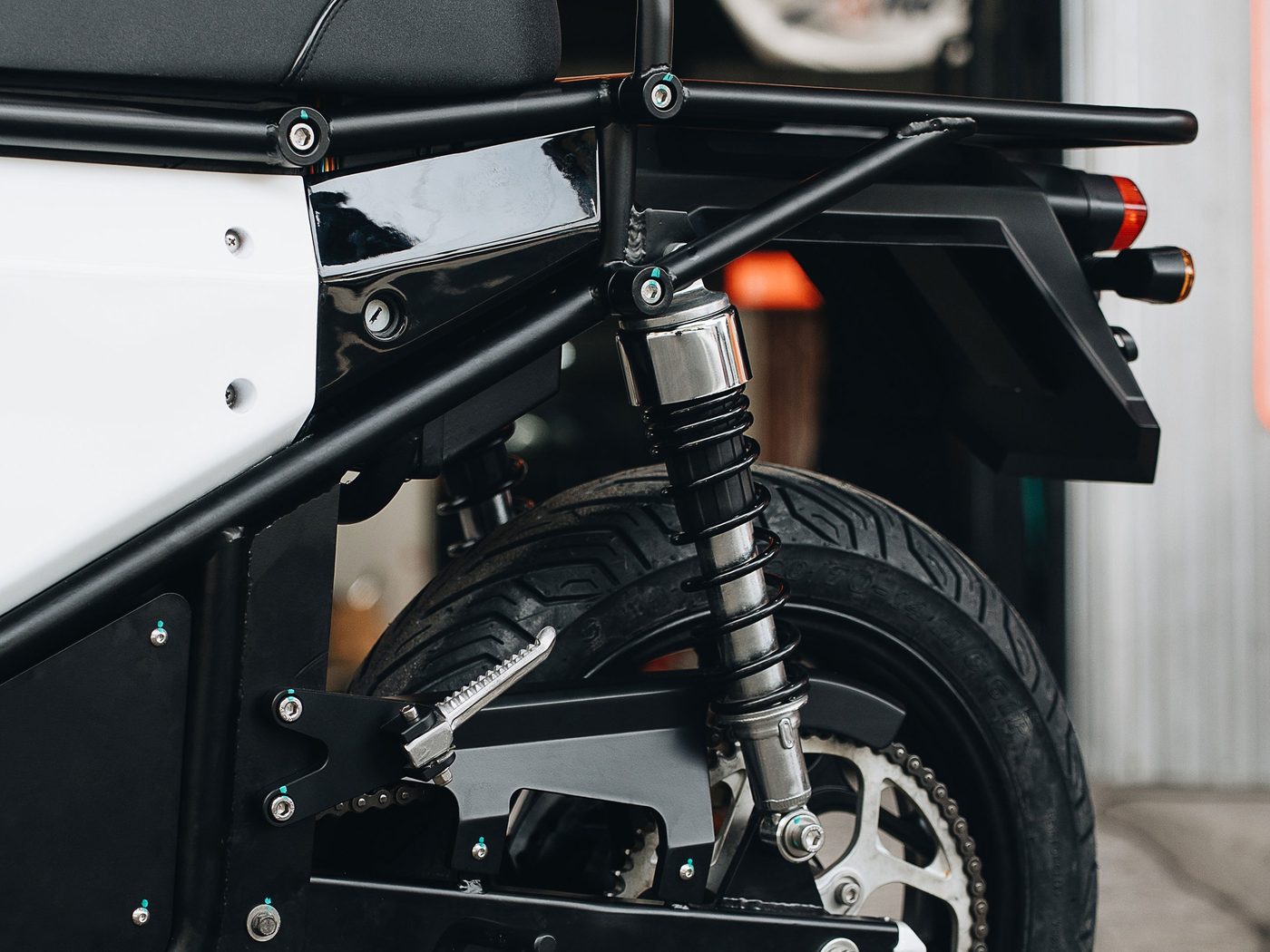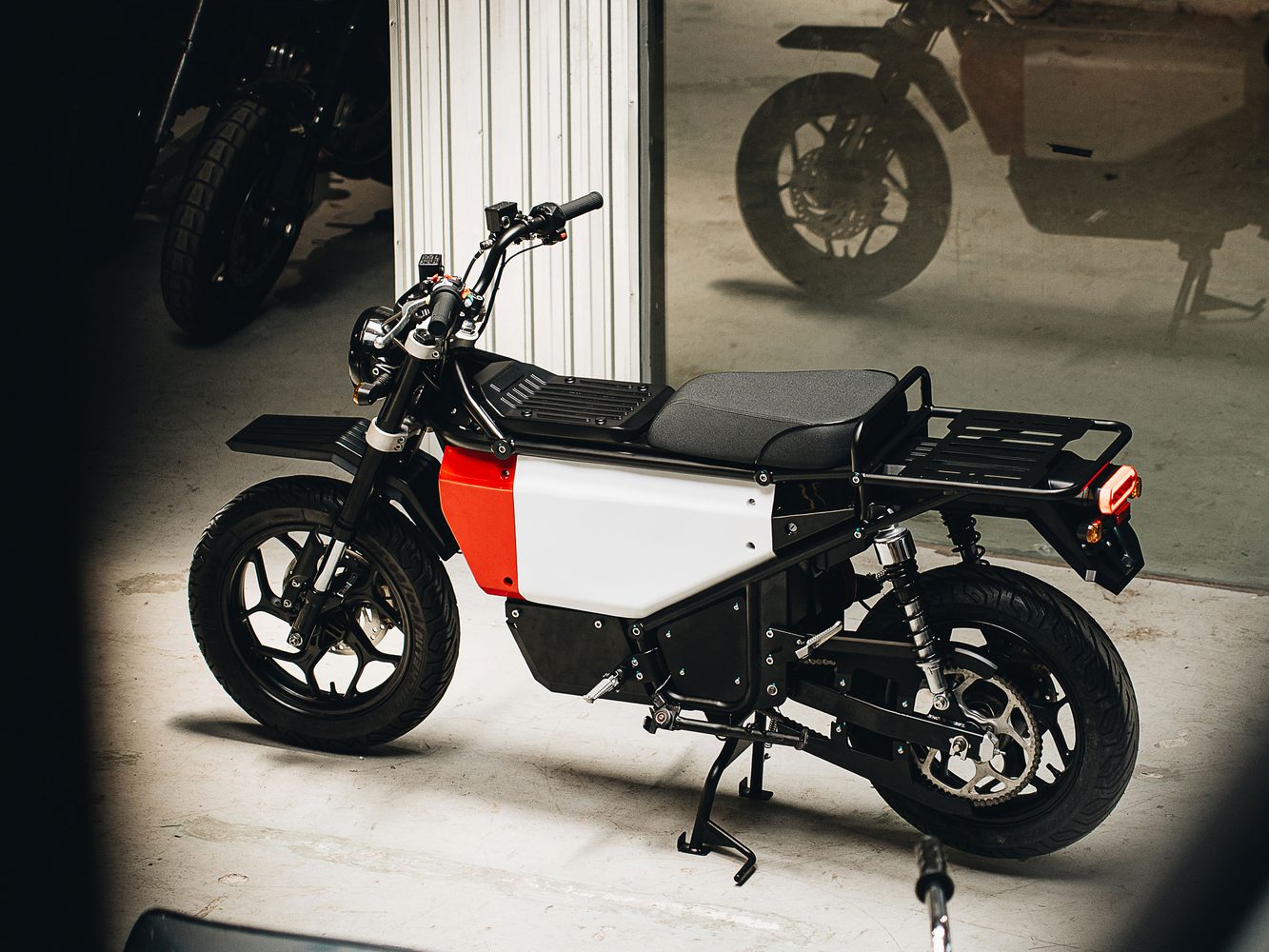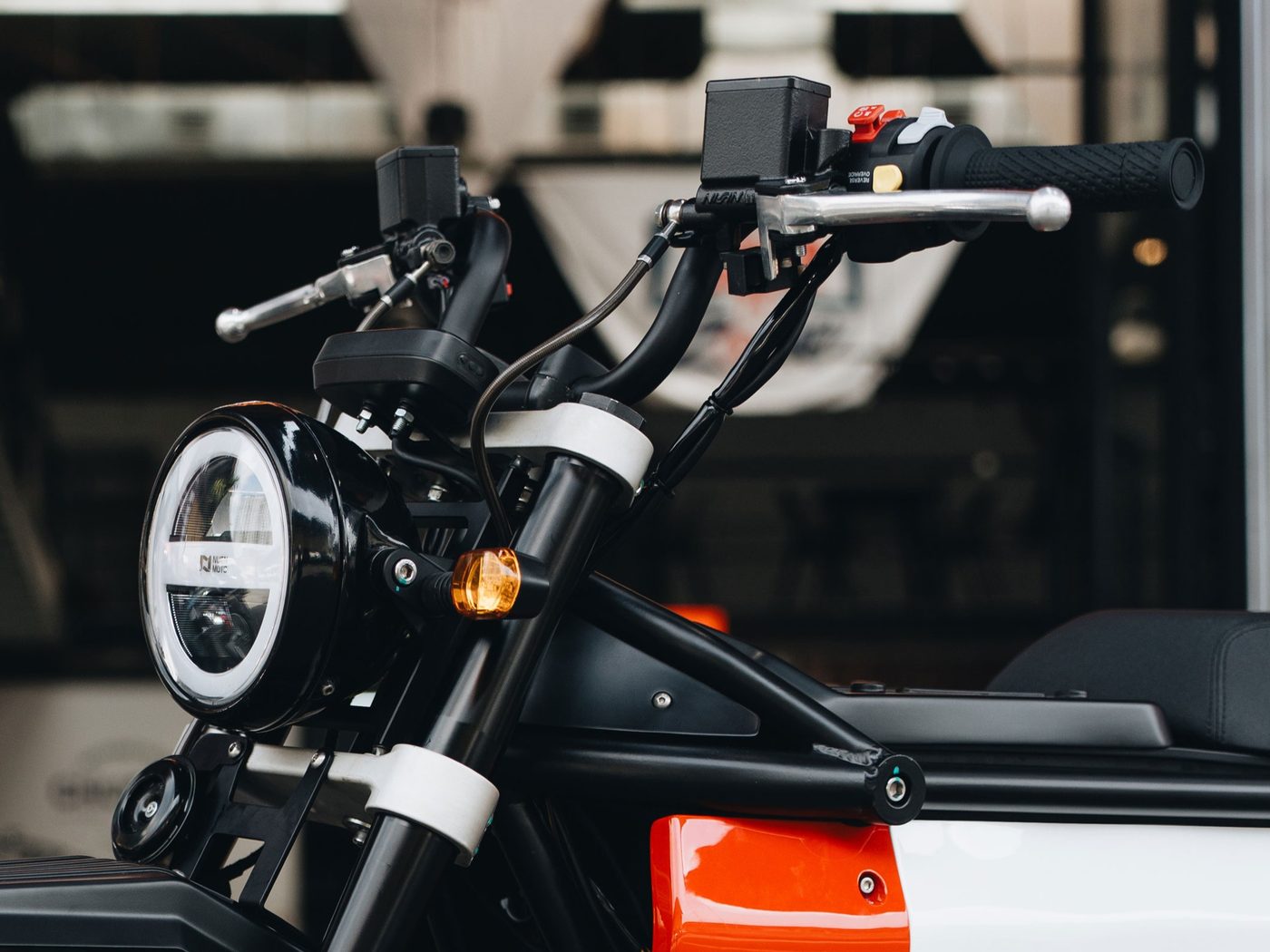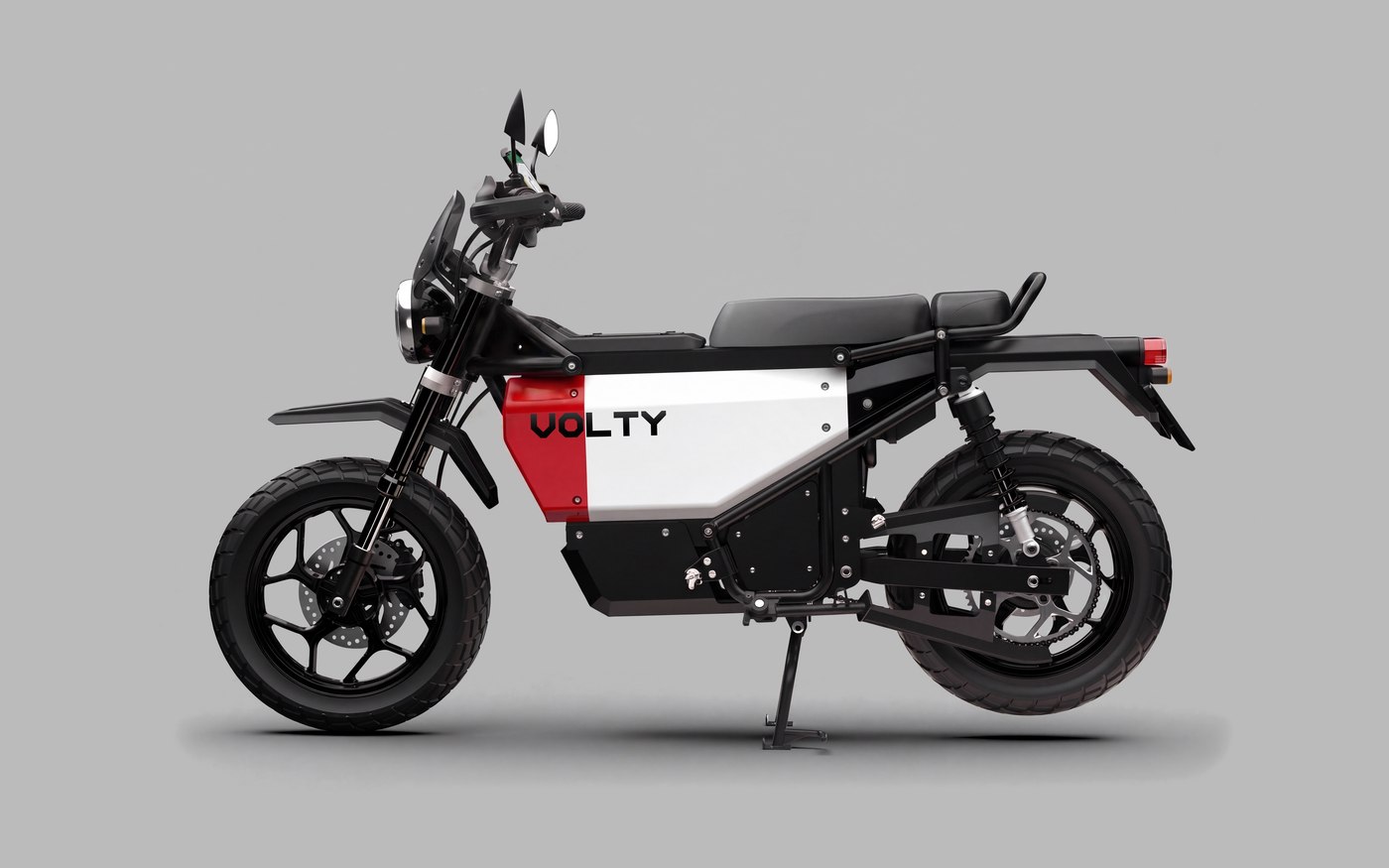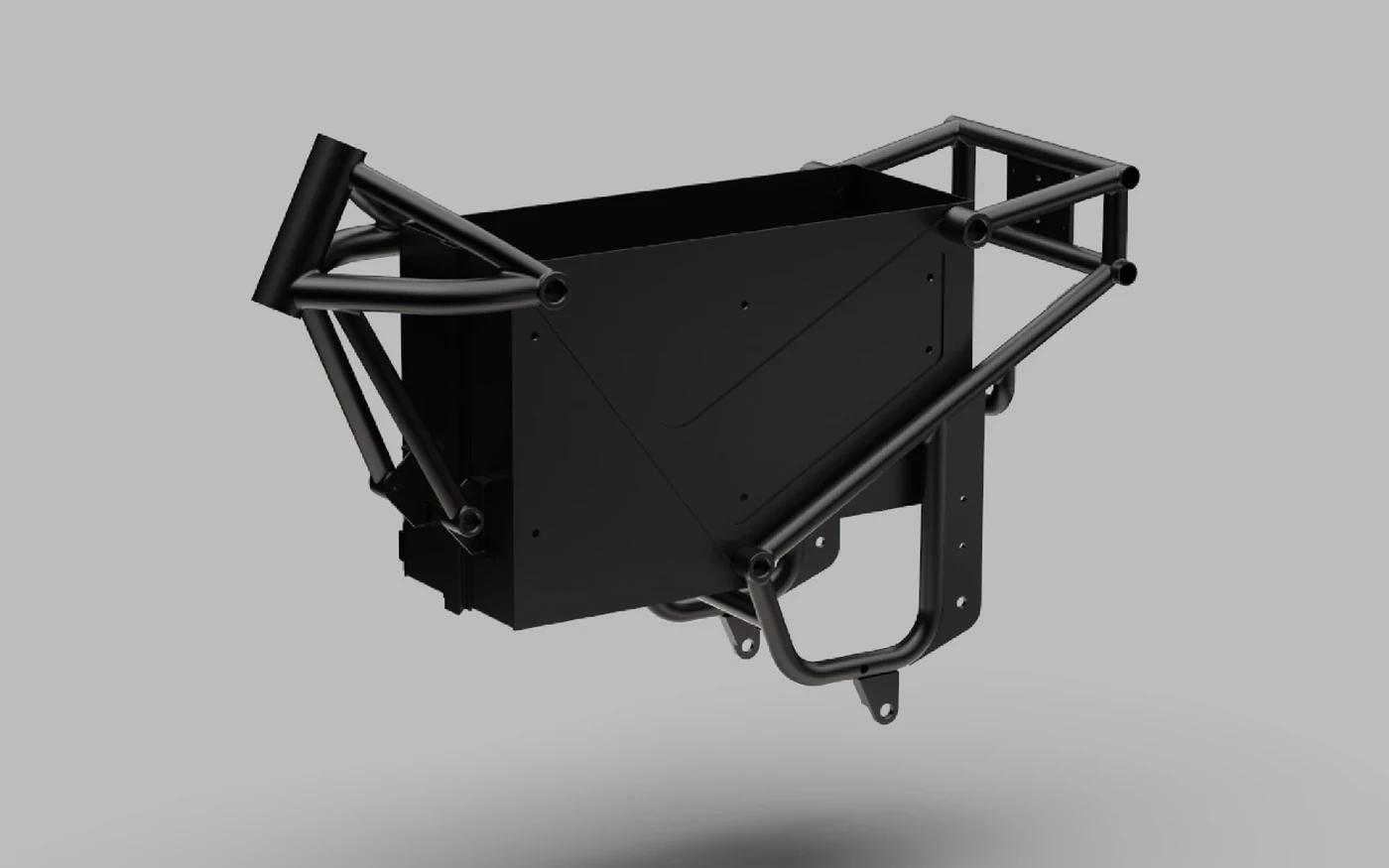
The steering tube and dual downtube frame provide primary structural support for the front floorboard and front cargo rack mounting points. Front payload forces are transferred directly into the main chassis, bypassing the outer fairings completely.
The main battery bay is engineered with high structural rigidity and heavily reinforced at critical stress points. It acts as the central structural hub linking the entire chassis, securing two primary battery packs while integrating the electric motor and drivetrain.
The rear frame connects directly to the battery enclosure to create a solid central chassis assembly, serving as the primary load-carrying structure. The heavy-duty cargo rack bolts directly onto this frame, enabling a total payload capacity of up to 200 kg (including the rider).
The drive unit connects the rear swingarm with dual shock absorbers, transferring motor power to the rear wheel through a standard chain and sprocket system. Using widely available, standard components means most local repair shops can service it, reducing spare parts delays and fleet downtime.
Diagonal struts tie the rack cage to the lower frame node, so the load runs through the tubes. 200 kg maximum payload, rider included.
A heavy-duty chassis platform anchored by a central battery enclosure that serves as a structural joint. The standardized modular framework allows for easy mounting of specialized cargo configurations, engineered to carry a total load of 200 kg and built for stable, durable performance through daily working use.
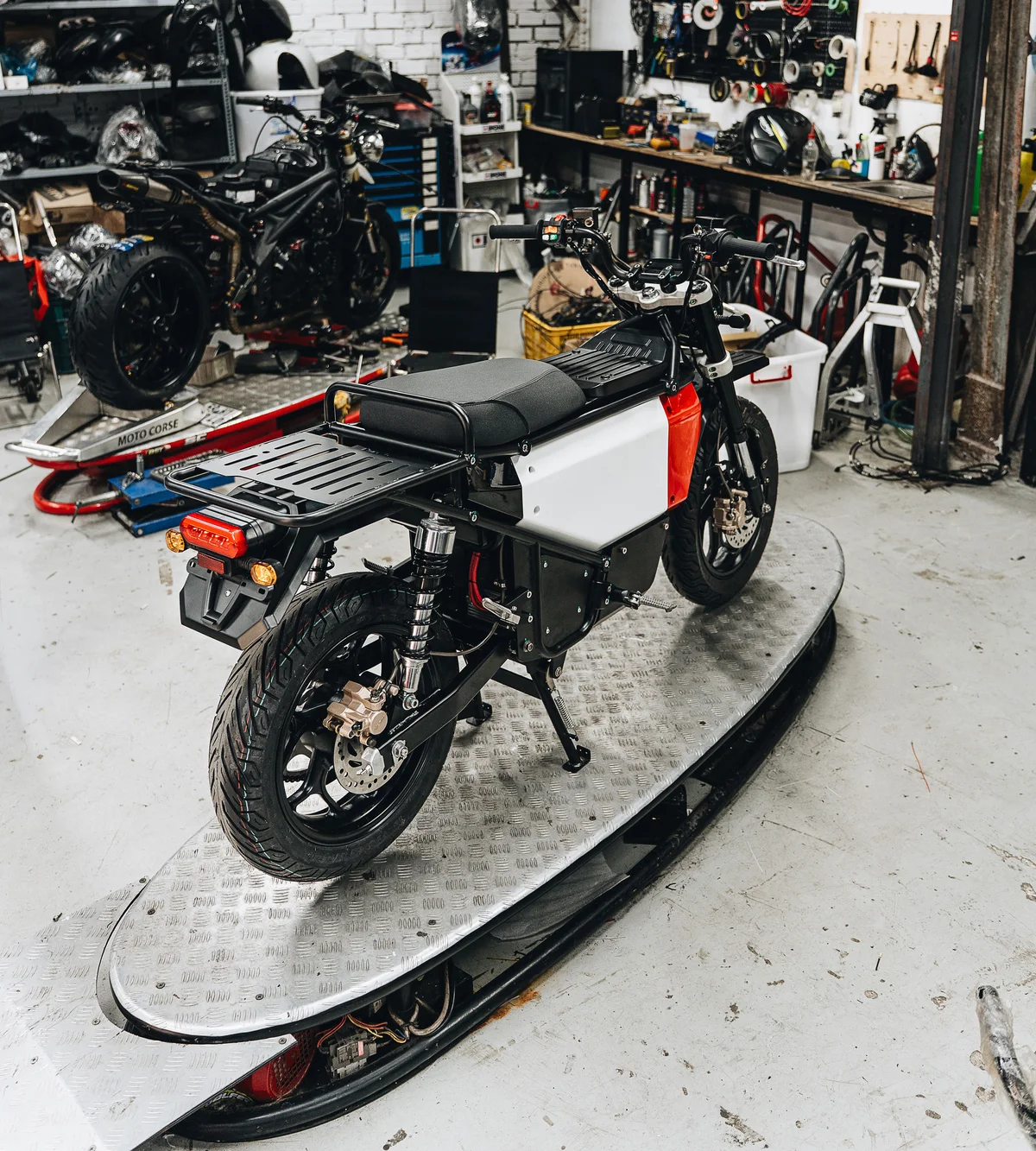
Most electric motorcycles for delivery riders in Vietnam are standard commuter bikes modified with aftermarket racks, forcing vehicles built for single commuters to haul a hundred kilograms over ten-hour shifts.
The U1 takes the opposite approach by prioritizing frame structure, rack geometry, and battery layout around work-cycle demands before styling. This design offers practical advantages beyond standard technical specifications.
Step through the sequence, or run it and watch the clock. One pack, both packs, or charging at home overnight: the vehicle is engineered for all three.
Swap timings reflect the design targets for the U1 bay: 54 seconds for a single pack at a cabinet, 1 minute 58 seconds for both. Home charging uses the same removable pack in a floor dock from a standard household outlet, at roughly 2.5 hours per pack. The pack format is common to the swap cabinets already deployed in this market, and the bay is engineered to accept packs from more than one provider. Selex Smart Electric Vehicle JSC is our current battery-swap partner.
Most electric two-wheelers in this market tie the rider to one battery brand for the life of the bike. The U1 bay was engineered the other way around: you choose the network, and you are not locked into it.
| Closed ecosystem | Volty U1 | |
|---|---|---|
| Battery supply | One vendor, for the life of the vehicle | Your choice of network when you buy |
| Changing network | Not possible, the bike is built for one brand | Possible later, set up at a Volty workshop |
| Price setting | Set by the vendor, take it or leave it | Networks compete to be chosen |
| Coverage | Limited to one network's map | Pick the network that covers your routes |
| Refueling | Charge, or swap within one system | Swap under 2 minutes, or take the pack off to charge |
| Repair | Authorized dealer | Any competent mechanic, standard parts |
Compatibility is designed into the battery bay. You choose a network when you buy, and any later change is made at a Volty workshop. Networks become available as commercial terms are signed, and we will name partners here only once agreements are executed.
Four things a rider notices in the first week, and keeps noticing in year three.
Chain final drive, twin rear shocks, a conventional swingarm, and disc brakes at both ends. None of that is exotic, and that is the point.
A belt drive or a hub motor would tidy the picture and put the rider at the mercy of one supplier. Everything wearing on this bike is a part a corner-shop mechanic in Vietnam can source and fit today, on a Sunday, without an appointment.
The exposed chain will need adjusting and the pads will need changing. Both take minutes and cost very little, which is the trade we chose over sealed components that fail rarely and expensively.

Front deck, mid rails, and rear deck all bolt to the frame independently, not to each other. Take one off and the others do not move, and neither does the way the bike carries a load.
The rated payload is 200 kg, and that is the maximum total the frame carries: rider, passenger and cargo together, not cargo on top of a rider. It is a frame number, not a rack number, and it is what the structure is designed to carry once the racks are hung on it.
For a fleet, that means one chassis and a parts list, rather than a different vehicle for every job. Reconfiguring a bike between a parcel round and a passenger shift is a spanner and ten minutes.

Wide bars, a flat single-piece seat, and one instrument pod. There is no second screen, no menu tree, and no app required to move the bike.
Twelve hours is the design case, not a one hour test ride. Bar height and reach, seat length, and peg position were set for a rider who is still on the bike at hour eleven with a full load behind them.
The seat takes two people. A working bike that cannot carry a passenger on a Sunday is a bike a rider will replace as soon as they can afford to.

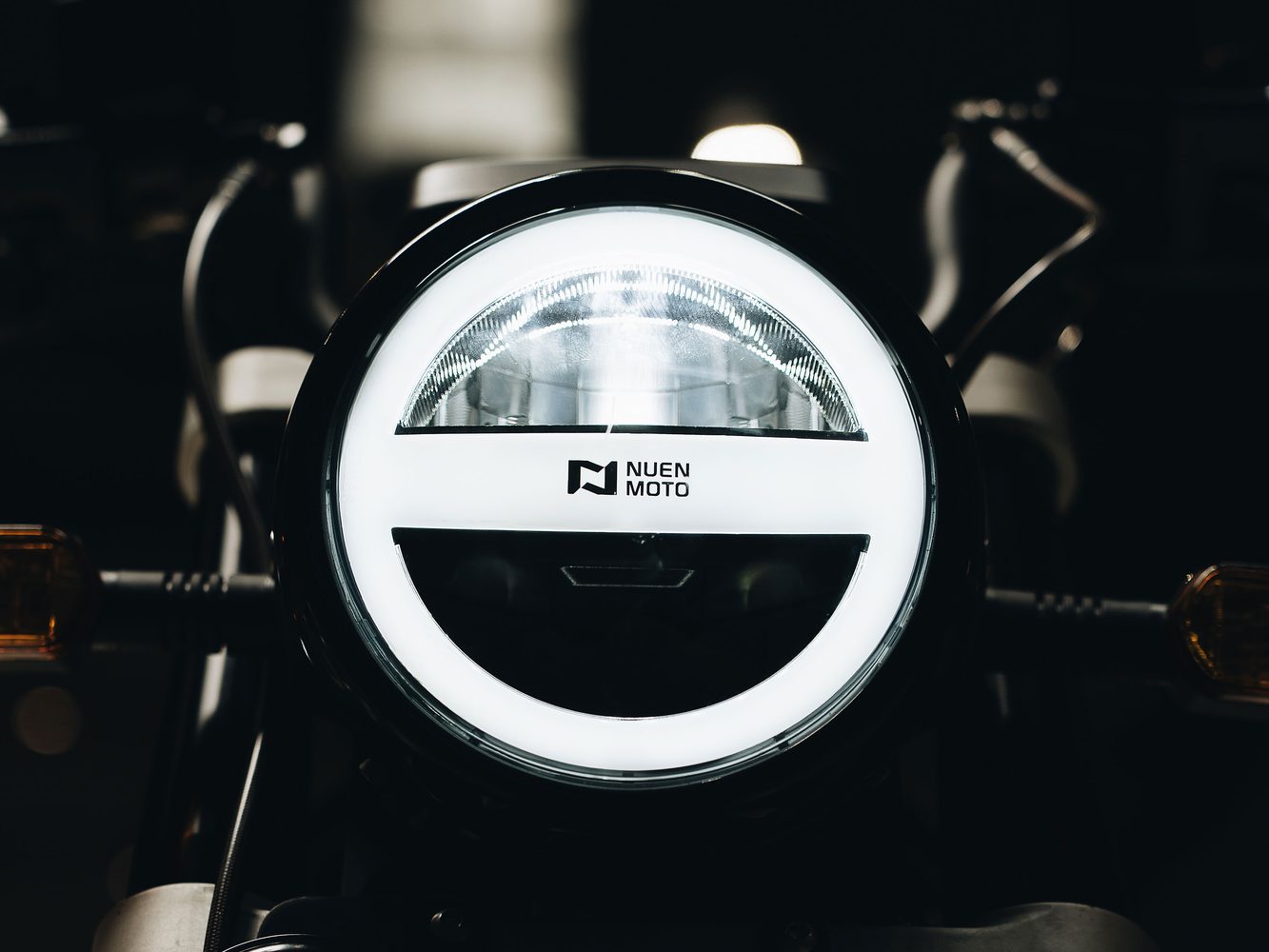
Full ring LED at the front, LED at the rear. Delivery and ride-hailing run in the dark at both ends of the day, and being seen early is a safety feature rather than a styling one.
LED units are built for a long service life, which cuts a recurring cost a rider otherwise pays out of their own pocket, and one more reason to be off the road.

Nothing structural changes between these. The frame, the bay, and the mounting points are identical, and the rest is a parts list.

Rear rack and slim side frames, nothing hung off the front. Room for a passenger's bag or a helmet case without widening the bike, so it still threads inner-city traffic the way a ride-hailing day demands.
Figures describe the vehicle as currently developed and tested. They are targets until type approval is granted, and they will be restated against the approved vehicle.
Specs reflect the current prototype and are subject to change before type approval.
The U1 shown here is a running prototype in ride testing. The chassis, battery architecture, and mounting system are settled and are what you see on this page.
Whole-vehicle type approval has not been granted by the Vietnam Register, and no vehicle can be delivered to a customer until it is. Accessory availability, final specification, price and the delivery schedule are confirmed directly with everyone on the list once ordering opens.
We are not taking reservations yet. Join the list for the first customer batch. We confirm your place, then your configuration, before any payment is asked for.
I want a U110 to 100 units, your riders, your districts, and an operating report you can put in front of your CFO before committing to anything.
Start a pilot
NUEN MOTO Company Limited
Tax ID 0317847638
11 Đường số 10, Khu đô thị Sala,
Tp. Thủ Đức, Tp. Hồ Chí Minh
+84 766 204 468
hello@voltymoto.com
Parent company: ride@nuenmoto.com
We use Google Analytics to count visits and see which pages are useful. It sets cookies and sends data to Google only if you accept. Declining changes nothing about how the site works.