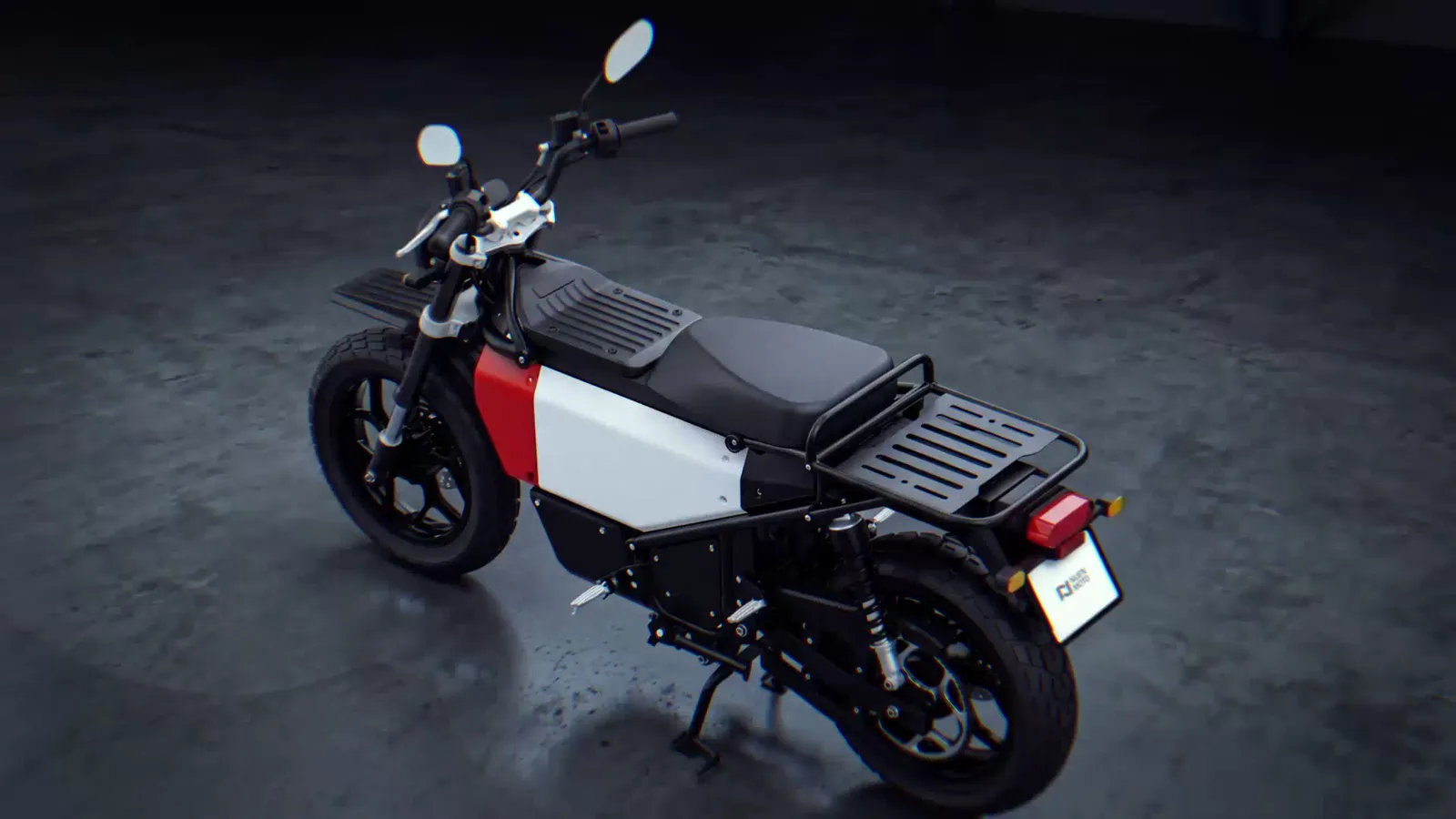
Volty U1 | A modular EV platform
We started with the load, not the look
Every component of the U1 was designed in direct response to rider feedback. Here is the sequence of our process and the changes made at each stage.
Every component of the U1 was designed in direct response to rider feedback. Here is the sequence of our process and the changes made at each stage.
Large-scale design follows a structured order rather than a linear path. Bypassing any step inevitably leads to costly repercussions later during tooling, where modifications become significantly more expensive.
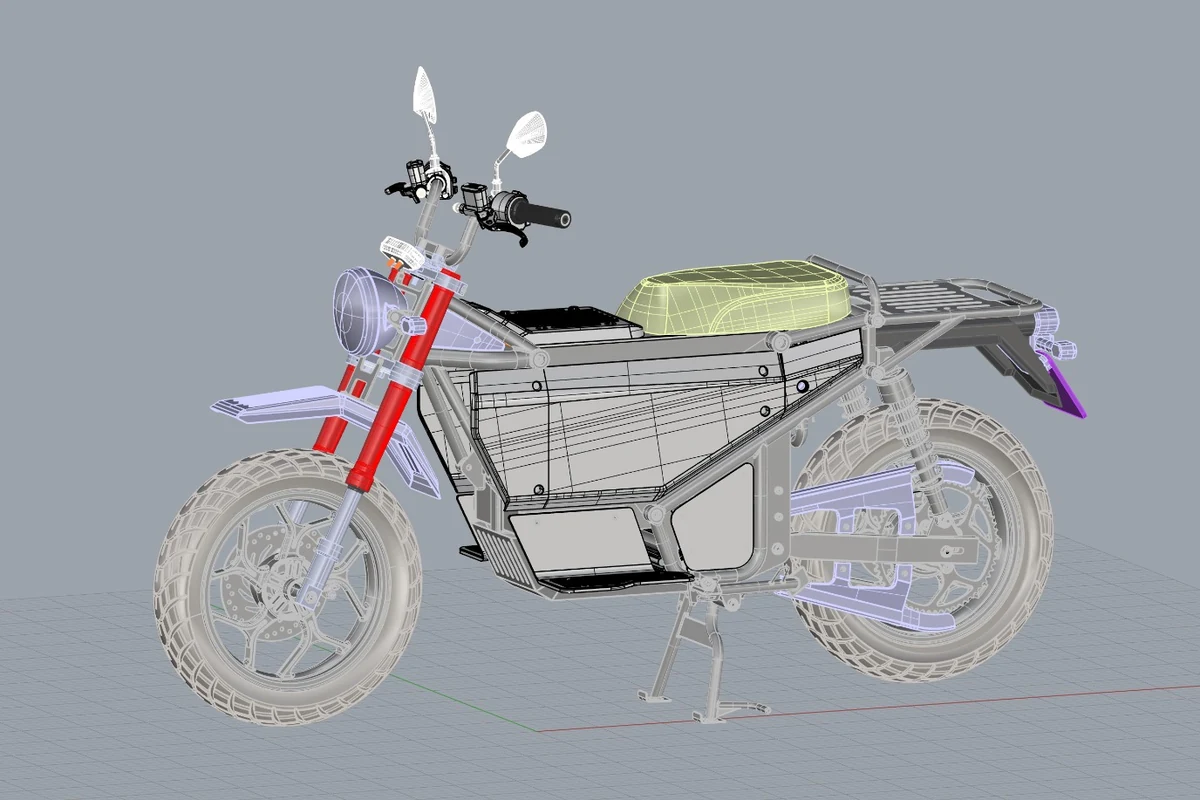
Prior to sketching a single line, we defined the bike's survival requirements: carrying 200 kg, enduring hundreds of loaded pull-aways daily, navigating unpaved roads, and handling riders paid per trip who won't baby the machine. These core requirements dictated the frame design, rather than the frame dictating the specs.
Every subsequent design decision stems directly from this document, including the wheelbase, rack dimensions, and weight distribution relative to the rear axle.
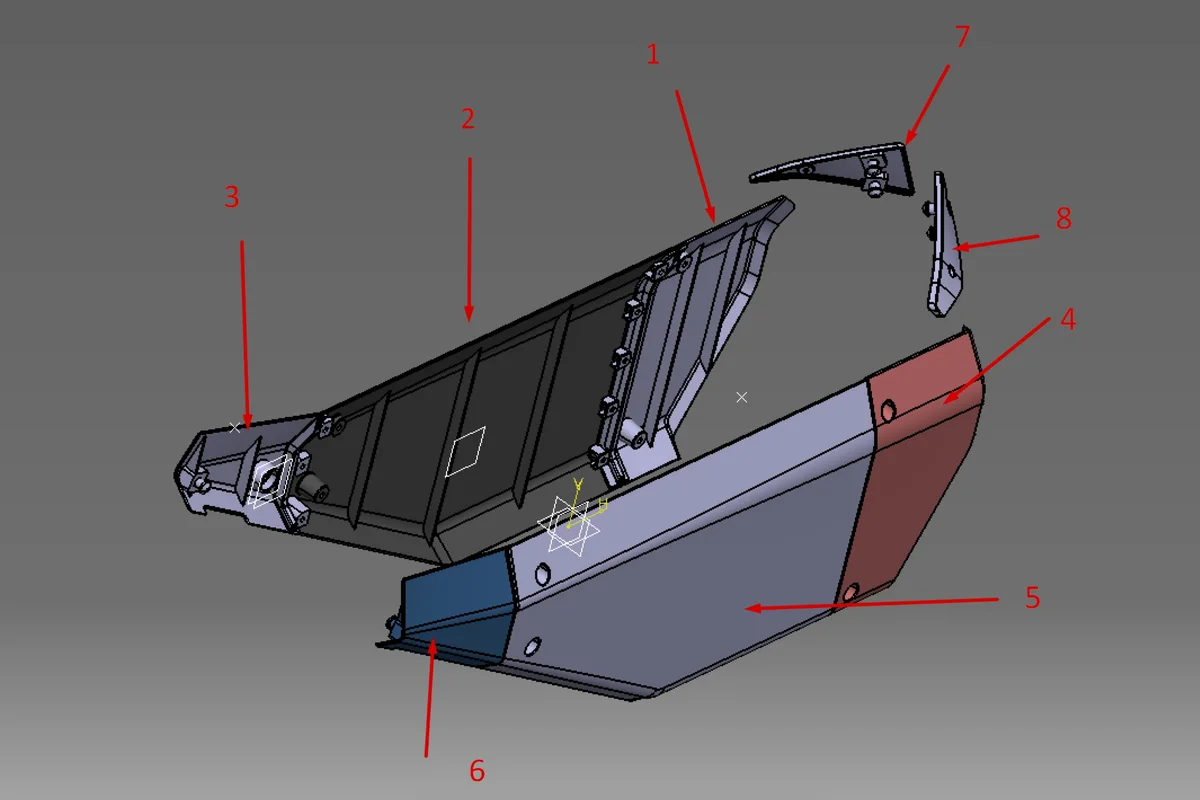
Relying on a single factory worldwide for a component risks halting production. To prevent this, assemblies are broken down so that individual pieces align with the existing capabilities of Vietnamese suppliers, such as tube bending, sheet-metal laser cutting and folding, and basic injection molding.
This approach also minimizes repair expenses after a crash. Instead of replacing a costly single-molded body panel, dividing it into four separate components allows riders to replace only the damaged piece.
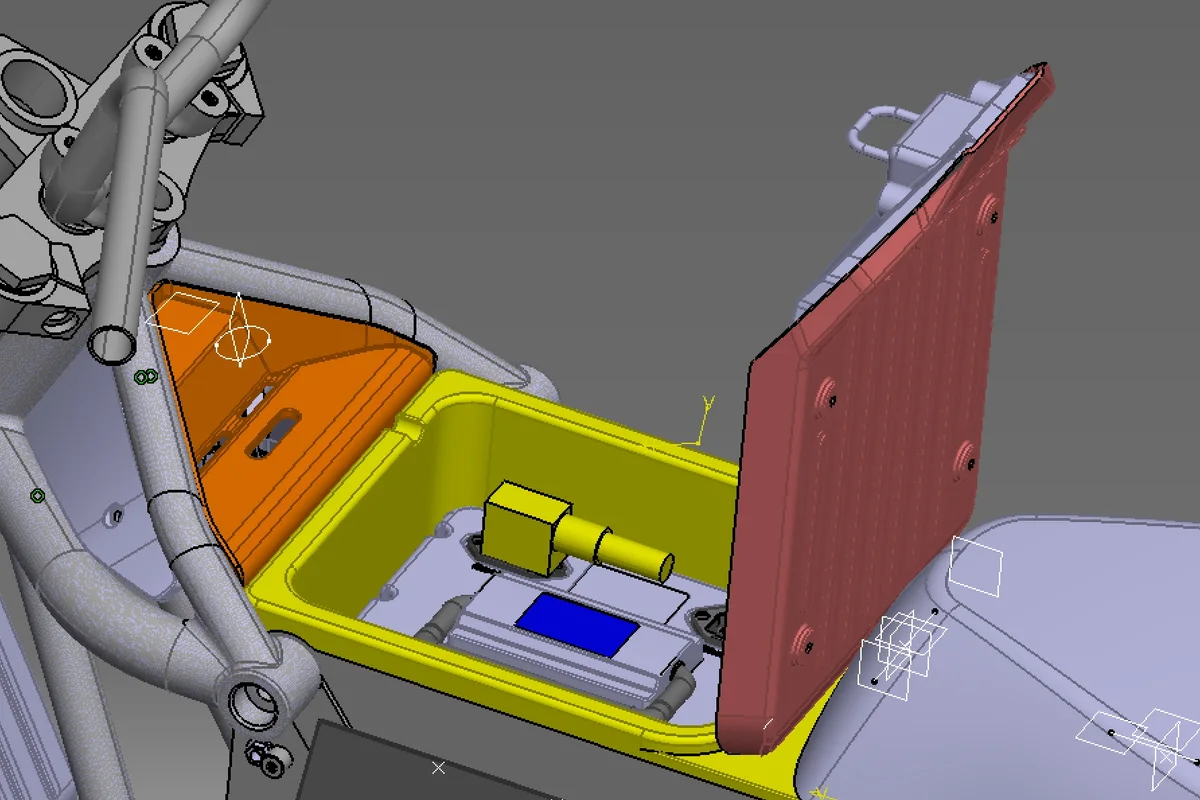
Fleet bikes are serviced by the nearest technician, not a dealer network. So every compartment on the U1 opens without taking the bodywork off: the front bay that carries the extra battery pack, the main battery bay, and the tray that holds the controller, wiring, and connectors under a hinged lid.
Access is designed in, not added later. If a part can wear out, fail, or be swapped, we placed it where hands and basic tools can reach it, and nothing sits buried behind something else. A roadside fix stays a roadside fix.
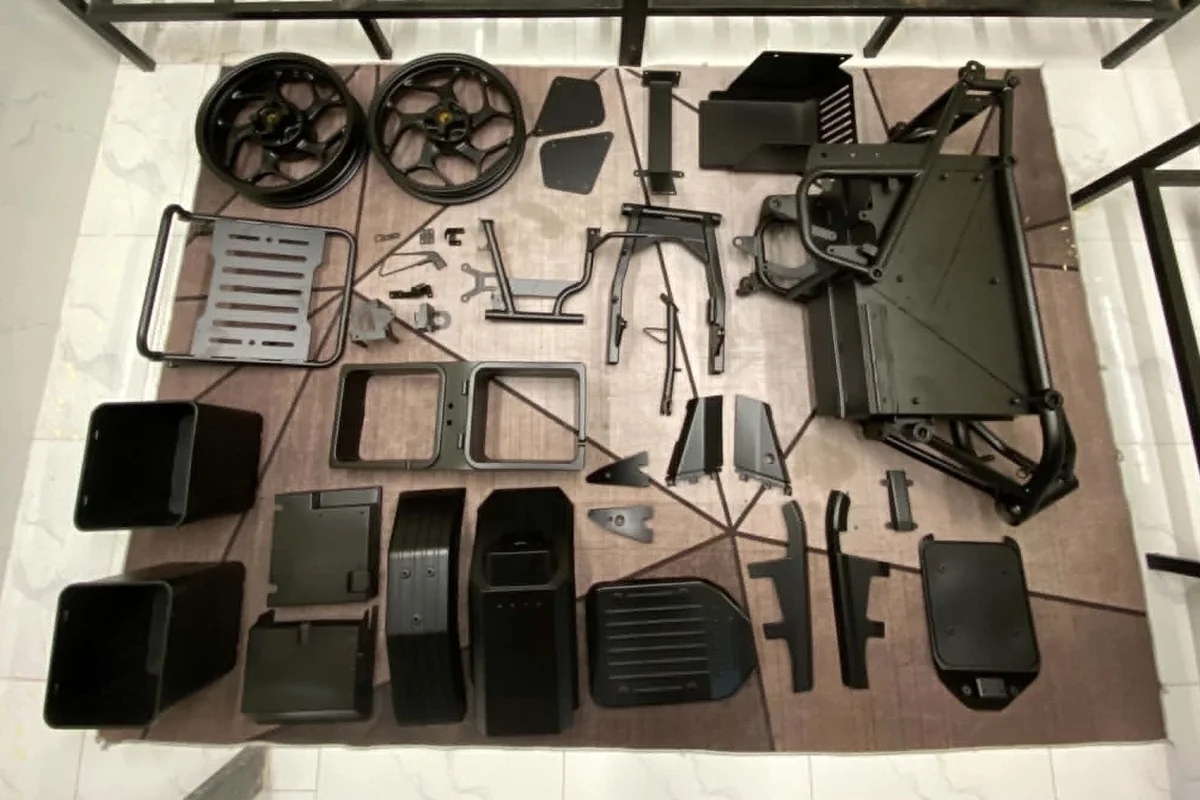
Every bracket, tray and cover is prototyped and test-fitted on a physical frame before a tooling order is placed. Prototyping a component takes an afternoon; discovering the same flaw after a mould is cut costs the mould.
Frames are fabricated and bench-tested at their rated payload before they carry anyone, and the vehicle is ridden long before it photographs well. Styling is applied last, over a package that has already been proven. That order is the whole argument of this page.
While sealed components appear refined, they present critical failures in remote environments. We utilize standard fasteners and accessible panels, ensuring that any wear item is reachable with basic tools rather than a professional workshop lift.
Segmenting the bodywork ensures that localized abrasions require replacing only a single component rather than an entire fairing. Within a fleet environment, surface wear is a persistent reality; we treat these repairs as predictable maintenance costs rather than exceptional incidents.
Specifying components based on existing regional manufacturing processes allows us to utilize domestic suppliers effectively. Local sourcing minimizes shipping delays and enables rapid design iterations, ensuring that technical adjustments remain close to the production line rather than traversing international borders.
Vietnam is moving two-wheelers off petrol, but there is no single standard battery yet. Each swap network runs its own pack, in its own size. So we did not design the U1 around one network's battery. We sized the bay for the largest removable pack we could find on the market, then made it adjustable so smaller packs from other vendors fit too.
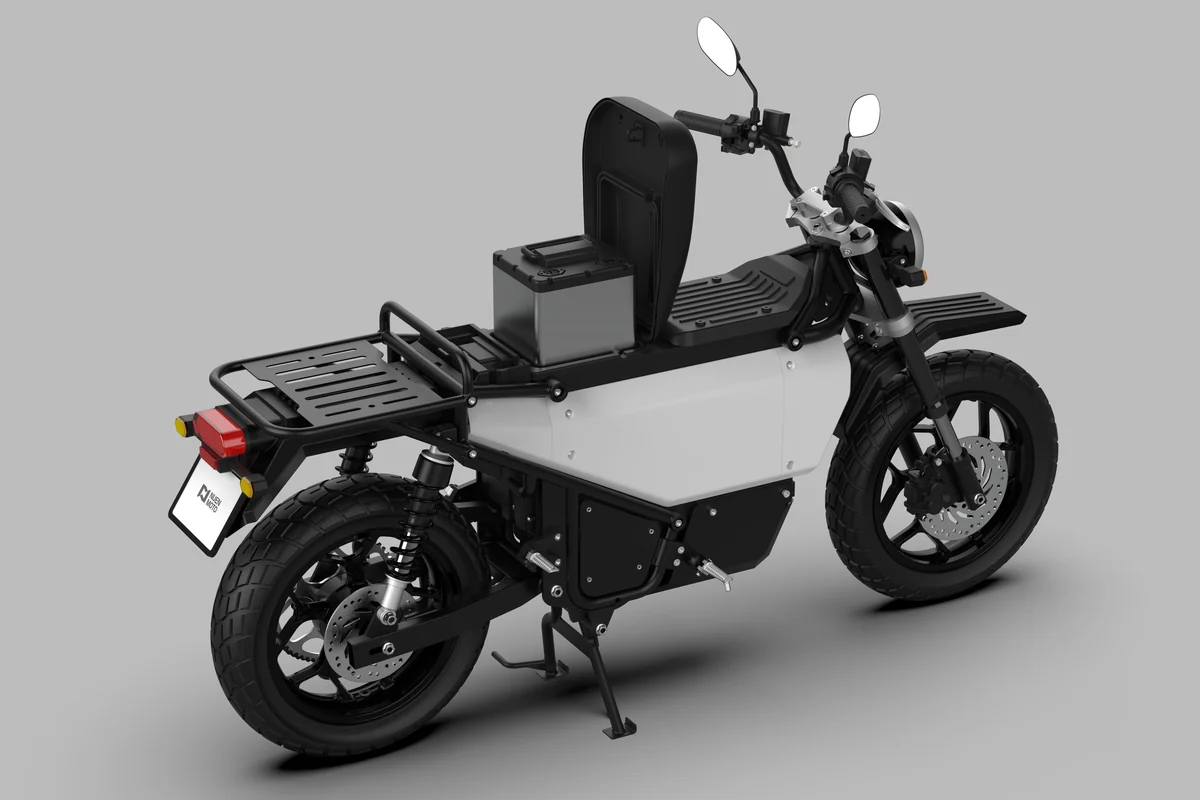
Two full-size packs sit upright under the seat line and lift out by the handle. Change them standing beside the bike, with nothing to unbolt.
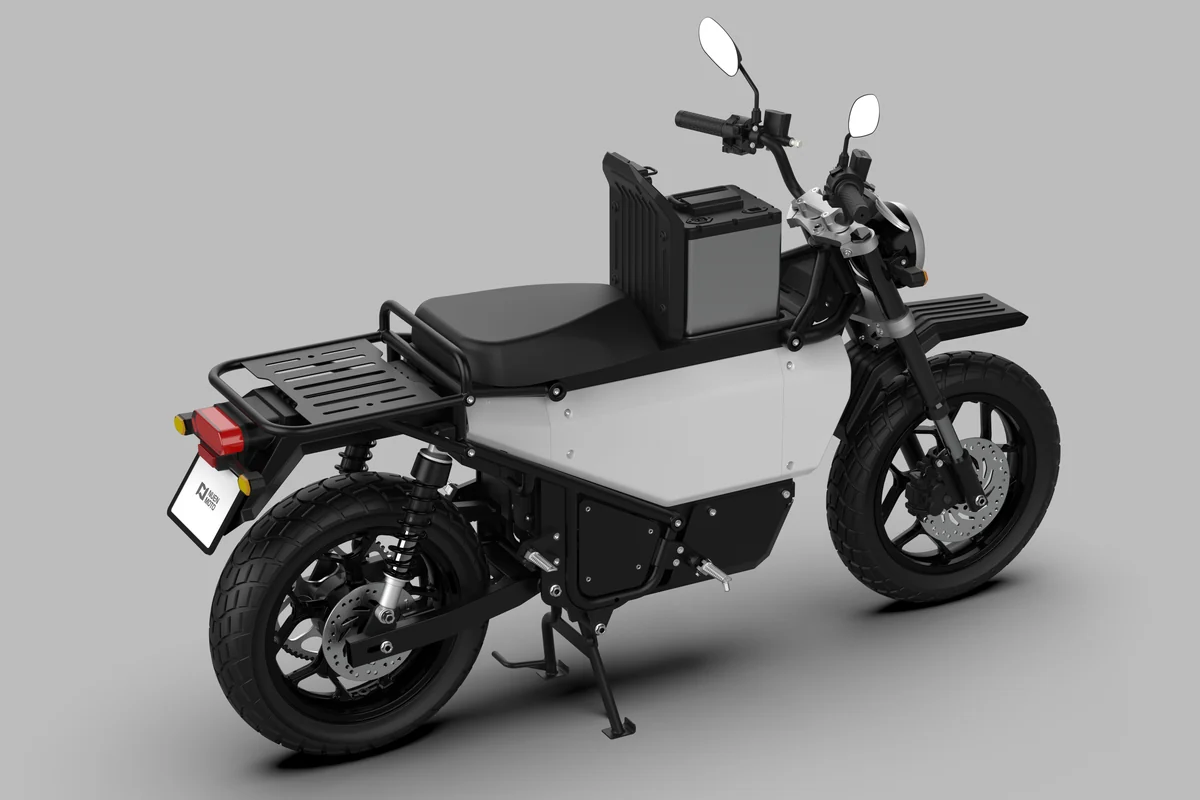
Under a hinged lid ahead of the seat. It takes an extra pack for more range, or smaller packs from vendors whose batteries are sized differently.
A charge parks the bike for hours. A swap takes under two minutes, so a bike that earns per trip keeps earning.
Many riders live down alleys or in apartments where a bike cannot be plugged in overnight. A removable pack goes upstairs to charge while the bike stays parked below.
Because the bay adjusts to different pack sizes, a fleet picks the network that fits and can change partner later with a workshop visit, not a new fleet. The bike stays the same. The network becomes a supplier.
A swap station is only useful if the bikes on the road can use it. Every U1 is one more bike that more than one network can serve, and that is how separate networks start to work like public infrastructure. As Ho Chi Minh City phases out petrol two-wheelers and Hanoi pilots its low emission zone, the bike that fits more networks is the one that keeps working through the change.
Pack count and fit depend on each vendor's dimensions and are confirmed network by network during validation.
The U1 remains a functional prototype undergoing rigorous technical validation. Every visual representation on this page utilizes our proprietary CAD models, additive components, and welded chassis. These running prototypes are documented in their natural state, serving as design studies rather than final production units. No unit can be delivered before whole-vehicle type approval from the Vietnam Register.
The functional philosophies detailed throughout this document inform the performance metrics established for the U1. For a perspective focused on empirical data rather than development methodology, we recommend beginning with the technical overview.
NUEN MOTO Company Limited
Tax ID 0317847638
11 Đường số 10, Khu đô thị Sala,
Tp. Thủ Đức, Tp. Hồ Chí Minh
+84 766 204 468
hello@voltymoto.com
Parent company: ride@nuenmoto.com
We use Google Analytics to count visits and see which pages are useful. It sets cookies and sends data to Google only if you accept. Declining changes nothing about how the site works.